Reading/Watching List
A curated collection of articles, videos, and podcasts that have shaped how I think about investing, technology, and the world. Each entry includes a few things I took away from it.

Finding The 1% of Stocks That Matter | Henry Ellenbogen
- 1/ Durable Capital hunts the rare 1% of public companies (~40 stocks) capable of compounding wealth at 20% annually over a decade
- 2/ Founders on their second venture have a distinct edge + total clarity on solving edge cases, managing scale, and aligning their organization from day one
- 3/ AI as the new Kaizen: just as physical supply chains benefited from decades of cost deflation, AI represents continuous improvement applied to human processes and white-collar IP labor
- 4/ Only initiate an early-stage investment if actively excited about buying more shares at higher prices once the business proves its competitive advantage
- 5/ Writing detailed investment memos is essential for executing multi-year post-mortems and intellectual honesty
- 6/ The friction and scrutiny of public markets can force crucial discipline, efficiency, and cultural alignment during difficult corporate transitions
YouTube · Durable Capital
Dan Sundheim of D1 Capital on the Art of Public Market Investing
- 1/ D1 applies the exact same deep, fundamental research process and 3–5 year time horizon regardless of whether a company is public or private
- 2/ The danger of selling winners prematurely
- 3/ Short-squeezes (like GameStop) proved that risk management cannot be reactive; short books must be highly diversified and sized small enough to withstand irrational melt-ups
- “You’re always going to make the most money from multiple expansion… sometimes people are skeptical of a business model, and then over time it gets proven out that the business model doesn’t deserve to have that skepticism, and then the multiple expands.”
- 4/ D1 requires analysts to maintain a weekly “mock portfolio” that ties stated convictions directly to compensation
- 5/ Sundheim halted investments in China because the government’s heavy-handed control over resources and lack of due process create uninvestable uncertainty
YouTube · D1 Capital

The Benchmark Partnership
- 1/ Maximizing happiness over AUM scale
- 2/ The firm thrives as an equal partnership because its founding members intentionally gave up their legacy and residual brand economics to empower the next generation + essentially “refounded” with each new partner
- 3/ Board role viewed not as governance but as a trusted co-founder who actively spars with entrepreneurs to sharpen their thinking; firms pitching “no board seat” fundamentally misunderstand this
- 4/ Distinguishing rare “entrepreneurs” who inherently challenge systems from “founders” who are riding a temporarily attractive trend
- 5/ AI investments succeeded not through a top-down thematic market map, but through relentless focus on backing incredibly special, non-consensus founders
YouTube · Benchmark
Inside WCMQ: Beating the Index for 17 Years | Paul Black
- 1/ Generating alpha requires shifting focus from businesses with wide moats to businesses where the moat is actively expanding
- 2/ Corporate culture is the primary driver of competitive advantage + and it can’t be captured in a spreadsheet, creating a persistent pricing inefficiency
- 3/ True cultural diligence requires off-script interviews with former employees, vendors, and competitors + not the CEO
- 4/ Protecting capital with a strong downside capture ratio allows wealth to compound significantly faster across market cycles
- “Our whole notion around competitive advantages is not to look for businesses with very big ones, but to try to own businesses where the probability is really high over the next decade or two that the competitive advantage is likely to get stronger.”
YouTube · WCM Investment Management

Human + AI Beats Both Alone: Alix Pasquet III
- 1/ Modern analysts overly rely on digital optimization tools, losing the deep “analog” skills forged under resource constraints
- 2/ AI accelerates consensus thinking, but critically dulls the human capacity to independently read between the lines
- 3/ In “freestyle chess,” the most lethal competitors combine advanced digital systems with rigorous analog intuition + investing is no different
- 4/ Routine stress requires routine recovery + insights naturally surface when the subconscious relaxes
- “Take a book and do inspectional reading… it allows you to put the words onto the picture and your memory actually goes up.”
YouTube · Analog Training

Rajeev Thakkar: Markets, Private Banks, IT Services & 19% Cash
- 1/ PPFAS is sitting on ~19% cash + not deploying aggressively but continuously screening; private banks, IT services, and city gas distribution named as pockets of value
- 2/ IT services carry attractive valuations despite the AI-disruption narrative + Infosys and HCL Technologies were added to the portfolio
- 3/ HDFC Bank highlighted as highly attractive on a long-term basis despite recent stock-price weakness
- 4/ Aggregate market returns are mathematically capped by costs once churn becomes high + a structural argument against active trading
- 5/ FOMO is a behavioural pitfall; rushing into assets after major appreciation is the most common investor mistake
YouTube · The Money Mindset

Not Once in 18,900 Tries: Michael Mauboussin on AI Growth
- 1/ Historical base rates force investors to step outside their bottoms-up models and check if their assumptions are statistically plausible
- 2/ OpenAI forecasts 108% compound annual growth over 5 years + a feat literally never achieved by any company in 18,900 historical instances
- 3/ Intangible-intensive companies display much fatter tails than physical companies: more blockbusters and more total busts, but similar average returns
- 4/ AI infrastructure buildouts are like massive public works + historically, large-scale projects only deliver on-time, on-budget, and on-target 0.5% of the time
- 5/ Stock buybacks and dividends do not mathematically create value; true wealth accumulation stems almost entirely from price appreciation
YouTube · Michael Mauboussin
Inside Anthropic’s $100 Billion AI Compute Commitment: Krishna Rao
- 1/ Compute is the lifeblood + too much leads to business failure; too little drops a lab below the frontier and leaves it unable to serve customers
- 2/ Anthropic uses three chip platforms (Tranium, TPUs, Nvidia) fungibly, routing workloads dynamically as availability and economics shift
- 3/ Frontier models achieve capability leaps and token cost efficiency simultaneously + it’s not a speed-vs-fuel tradeoff
- 4/ Anthropic has signed over $100B of compute commitments + 5-gigawatt deals with Google, Broadcom, and Amazon landing continuously through 2027
- 5/ Returns to being on the frontier remain remarkably high: Anthropic scaled from a $9B run rate to north of $30B in a single quarter
Invest Like the Best · Patrick O’Shaughnessy

Inside the Mind of a Tech Investor: Gavin Baker
- 1/ Deep engagement as a consumer is the supreme starting point for finding investment ideas + if you like the product, you’ll love the stock
- 2/ High leverage is the primary warning flag in tech and telecom + price wars can break out and destroy a levered name overnight
- 3/ Reading transcripts beats meeting with public company management + well-trained executives never say anything not already in a filing
- 4/ TSMC’s disciplined expansion helps everyone avoid the traditional boom-bust cycle + a real-world physical constraint that functions as a market governor
- 5/ Coding may be the shortest, most elegant path to AGI/ASI + not just a killer app, but the ultimate AI app that subsumes everything else
YouTube · Sohn Conference Foundation
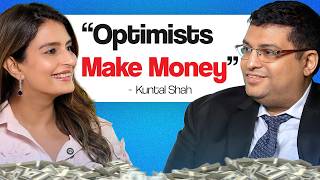
The India Opportunity Is Far Bigger Than Most Investors Realize: Kuntal Shah
- 1/ India represents just 3% of global equity market capitalization + leaving 97% of global profit pools completely untapped by domestic investors
- 2/ India’s per capita GDP of $2,500 represents an early infant stage of long-term wealth compounding
- 3/ A 35% NASDAQ and 65% Indian index allocation would have outperformed almost every active fund manager over a long investment horizon
- 4/ Acts of omission and premature selling were the two biggest mistakes in a three-decade public market career
YouTube · Oaklane Capital
Contrarian Quality at GQG Partners: Rajiv Jain
- 1/ Investment quality is defined as high immutable barriers to entry + preferring irreplaceable physical assets like deep-water oil fields over high-multiple tech
- 2/ Semiconductor industries face declining quality because Chinese manufacturing expansions will eventually overproduce and destroy global corporate returns
- 3/ Top-tier foundation model startups are burning billions in cash losses while renting GPU capacity at prices that barely cover their compute costs
- 4/ GQG structures its research team with investigative journalists specifically compensated to criticize and disprove core portfolio theses
- 5/ Position sizing mimics rigid credit auditing guidelines, preventing concentrated allocations in narrow or monoline business structures
Capital Allocators · Ted Seides
Why the AI Boom Is Just Getting Started: Alex Sacerdote
- 1/ The foundation model layer has consolidated into a tight three-horse oligopoly: OpenAI, Anthropic, and Google’s Gemini
- 2/ Coding tools triggered a massive enterprise shift in 2025, enabling developers to spend $100 daily on tokens
- 3/ The enterprise AI application market is less than 1% penetrated + following a straight upward vertical adoption curve
- 4/ Whale Rock Capital shorted traditional application software after recognizing that corporate IT budgets were being redirected toward AI tokens
- 5/ The hardware stack is being decommoditized because advanced AI workloads are pushing servers to the absolute physical limits of liquid cooling
Invest Like the Best · Patrick O’Shaughnessy

Ilya Sutskever: From the Age of Scaling to the Age of Research
- The era where scaling (adding compute and data) was the primary driver of progress is concluding as pre-training data becomes finite; breakthroughs now depend on novel algorithmic ideas
- AI models ace difficult benchmarks but fail basic real-world logic (e.g., oscillating between bugs in code), highlighting a deficit in reliable generalization vs. humans
- Humans require drastically fewer samples to learn (e.g., 10 hours for driving vs. millions of simulations for AI), proving more efficient ML principles exist + Moravec’s paradox
- SSI prioritizes a focused research path to superintelligence, insulating itself from product-cycle pressures to solve fundamental bottlenecks like sample efficiency
YouTube · SSI

Sir Demis Hassabis on The Future of Knowledge
- Games (chess, Go) are not ends but data-rich, rule-governed testbeds for developing general learning algorithms
- DeepMind’s ultimate goal: use AI to solve “root node” problems like protein structure (AlphaFold) to unlock entire fields of medicine and material science
- Any pattern in nature can potentially be modeled by classical learning algorithms, challenging the necessity of quantum computing for biological simulation
- Future progress relies on “Astra” and world models that understand intuitive physics and spatial context beyond what text-based LLMs can capture
- AI development requires new global institutions (a “Technical UN” or “AI IAEA”) to monitor risks and ensure safe progress
YouTube · Institute for Advanced Study
Fei-Fei Li: Spatial Intelligence is the Next Frontier in AI
- Spatial intelligence + the ability to perceive, reason about, and interact with the 3D world + is the essential missing piece of AGI
- Vision took 540 million years to evolve, language less than one million, highlighting the vast complexity gap between LLMs and “World Models”
- ImageNet (2009) was a bold bet that a paradigm shift toward data-driven methods was necessary for machines to generalize
- World Labs aims to solve “delusional” problems in 3D world modeling, combining generation with physical reconstruction and causal reasoning
- Academia is now severely under-resourced compared to industry, requiring researchers to pivot toward interdisciplinary and theoretical North Stars
YouTube · World Labs
Why Context Graphs Are the Missing Layer for AI
- 1/ Without a central context graph, autonomous agents lack the ground truth necessary to operate across disconnected systems
- 2/ A context graph acts as a durable, proprietary moat by logging the nuanced “decision traces” of an organization
- 3/ The new AI interfaces orchestrating these contexts represent an exponentially larger market cap than the legacy databases they sit on
- 4/ True context graphs form implicitly by providing direct value to users + avoiding the trap of manual CRM data entry
- 5/ Enterprise agent adoption is exploding because the ROI is painfully obvious from the very first interaction
YouTube

The History and Future of AI at Google: Sundar Pichai
- 1/ Transformers weren’t invented in a research vacuum + they were driven by practical product needs to scale global translation on TPUs
- 2/ Search will evolve into an “agent manager,” shifting from text retrieval to autonomous long-running task execution
- 3/ Google committed to its proprietary TPU chips in 2016, anticipating the AI compute wave + deep moats take years to mature
- 4/ Physical bottlenecks + memory supply, energy grid permitting, wafer starts + are the primary limiters to scaling AI capability through 2027
- “A lot of what are just information-seeking queries will be agentic in Search. You’ll be completing tasks. You’ll have many threads running.”
YouTube · Google
The Supply and Demand of AI Tokens: Dylan Patel
- 1/ Ideas and implementation are now incredibly cheap + only the absolute best can stand out above the AI slop
- 2/ Advanced frontier model capabilities will increasingly be gatekept for elite customers capable of spending billions on dedicated clusters
- 3/ Hardware supply bottlenecks + from logic chips to high-bandwidth memory, lasers, and copper foil + are pushing gross margins upstream to suppliers
- 4/ Expanding AI usage generates value that drastically outpaces computing supply, cementing heavy pricing power with infrastructure providers
YouTube · SemiAnalysis

The Future of Intelligence: Demis Hassabis
- 1/ The center of AI gravity has shifted from static language models to agentic AI systems capable of setting and achieving long-term goals
- 2/ A critical hurdle to AGI is overcoming “jagged intelligence” + AI that performs PhD-level math but fails basic high school logic
- 3/ World models capture the physical, spatial, and mechanical dynamics of reality that are extremely difficult to articulate in text alone
- 4/ DeepMind is running AI agents inside simulated worlds created by other AIs, enabling virtually infinite training loops
- “It’s overhyped in the short term and still underappreciated in the medium to long term, how transformative it’s going to be.”
YouTube · DeepMind
Three Quarters of the Way to AGI: Demis Hassabis
- 1/ AlphaFold’s success proves AI can solve “root node” problems to unlock massive downstream scientific breakthroughs
- 2/ AGI development is approximately 75% complete + DeepMind maintains its original predicted timeline of 2030
- 3/ Information might be the most fundamental building block of the universe, preceding even energy and matter
- 4/ Building a highly capable, precise tool should always precede grappling with questions of artificial consciousness
YouTube · DeepMind

How AI Agents Will Transform the Workplace: Sridhar Ramaswami (Snowflake)
- 1/ Snowflake’s consumption-based model charges enterprise clients only for the precise computational queries they run + aligning economic value with actual usage
- 2/ Advanced coding agents are the primary competitive threat to traditional software + the new front door to computing
- 3/ AI models introduce the complete industrialization of software engineering, allowing full code applications to be generated from natural language
- 4/ Modern software engineers operate as managers of specialized agent teams, utilizing taste and judgment rather than tracking rigid compiler rules
In Good Company · Nicolai Tangen

Ben Thompson (Stratechery) on AI Ads, the End of SaaS, and the Future of Media
- “Agent commerce” could trigger brutal perfect competition + AI making optimal purchasing decisions strips emotion from commerce, devastating retail margins
- SaaS valuations are compressing as AI agents and self-serve tech limit headcount growth, forcing legacy businesses into massive valuation haircuts
- A major chip shortage is looming by 2029 + TSMC is underbuilding because the downside of excess fabrication capacity is too severe
- Google’s lack of optimization is its hidden strength + excess cash flow and organizational slack give it the flexibility to survive major disruption
Cheeky Pint (Stripe) · John Collison

Demis Hassabis & Dario Amodei: The Day After AGI (Davos 2026)
- AI may fully automate software engineering within 6–12 months + models could handle the entirety of what SWEs do end-to-end
- Once AI can write code and conduct AI research, it will dramatically accelerate next-generation models + closing the loop triggers exponential progress
- AI revenue scaling exponentially: Anthropic went $0 → $100M (2023) → $1B (2024) → $10B (2025)
- Geopolitics prevents a coordinated AI slowdown + chip export restrictions are the most critical lever for buying time
World Economic Forum · Davos 2026

Gokul Rajaram: Lessons from Investing in 700 Companies
- Human judgment is the most future-proof skill + with AI generating massive output, humans must determine what actually matters
- AI startups must own a scarce asset or control point to survive + proprietary data, financial movement, or hardware
- Non-deterministic software forces heavy evaluation (evals) + a PM’s primary role is now building evaluations to confirm if AI output is safe to ship
- The future of management is orchestrating fleets of AI agents rather than managing human employees
Invest Like the Best · Patrick O’Shaughnessy
Venky Ganesan (Menlo Ventures): Inside Silicon Valley’s AI Gold Rush
- AI is the biggest platform shift of our lifetime + bigger than the internet, and the value will eventually move to the application layer
- Infrastructure is overvalued, applications are undervalued + too much capital going to AI infra, leaving apps as the opportunity
- India faces critical choices on sovereign AI + build closed-source, embrace open-source, or partner with US companies for localized models
- Tech shifts do not cause long-term job destruction + historical precedents (agriculture, ATMs) show AI will alter roles, not eliminate employment
YouTube · Menlo Ventures
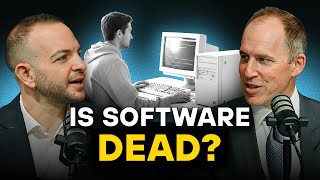
Bret Taylor: Is AI Killing Software?
- “Vibe coding” will become the standard expectation + the idea that your software is something you can change yourself will be something we expect
- Software form factors will shift from browsers and forms to autonomous agents operating against databases
- Personal AI agents will become the internet’s front door + consumers will delegate browsing and purchasing to their agents
- Business model transitions (e.g., outcomes-based pricing) will be far harder for incumbents than adopting the underlying technology
Big Technology Podcast · Alex Kantrowitz

Sridhar Ramaswamy (Snowflake): Data’s Role in the AI Era
- Enterprise AI demands a single source of truth + built on security, auditability, and trust; customer data is never used to train external models
- AI delivers extreme accelerations + software engineering projects that took four weeks now take forty minutes (100x speedup)
- Agile organizational setups matter more than pure hardware + team structure for fast deployment beats massive hardware spending
- AI is redefining corporate workflows + enterprises are using AI tools to completely replace legacy software and rip out old processes
Sequoia Capital · Training Data

A War of Attrition: Missiles, Oil, and Global Power | The Loonie Hour
- Oil and gas are the new foundation of US military strength
- The current Middle East conflict is a war of attrition and depletion of US military inventories + the US is dangerously short on air defense missiles
- China and Russia benefit from a prolonged Middle East war; China has prepared by building massive refining capacity and stockpiling
- Global oil markets are no longer a free, frictionless trade
YouTube · The Loonie Hour
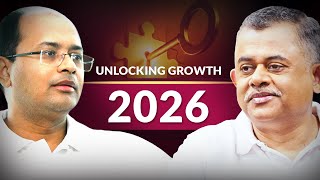
Future Forward: What India’s Economy Looks Like in 2026 | Open Dialogue
- India achieved growth despite massive fiscal and monetary headwinds
- Fiscal consolidation will slow in FY26; credit growth is reviving, state-level labor reforms are unlocking potential, and the real estate cycle is picking back up
- The Rupee’s depreciation is a capital account issue, not a fundamental problem + gold speculation effectively shorts the Rupee; the Rupee remains competitive on a trade-weighted basis
YouTube · Open Dialogue

Russell Napier on The Solid Ground, Anatomy of a Bear
- Economic theory relies on the “rational economic man,” completely ignoring the realities of psychology, sociology, and political behavior
- Financial repression forces savers to pay for government debt; the state uses regulations (like mandating pension fund purchases) to keep bond yields below inflation
- The US is adopting China’s style of “social capitalism” + abandoning pure free-market principles to heavily subsidize its own industries to compete with state-sponsored overcapacity
- Gold is critical because it lacks counterparty risk; value stocks will thrive in this new environment
YouTube · The Solid Ground
WW3, Energy, Markets & Politics with Doomberg
- The world is actively fighting an economic World War III; the Middle East is exclusively about oil and gas + the US no longer needs it for itself but uses its presence to constrain China
- Social media training algorithms show opposing sides starkly different, highly propagandized versions of reality + dangerous “parallel universes”
- Taiwan can be defeated without an invasion: complete reliance on imported LNG for power means China only needs a blockade to force capitulation
- Redeploying US defenses (Patriot and THAAD) from South Korea to the Middle East leaves Asian allies vulnerable to aggressive moves by North Korea and China
YouTube · Doomberg

Energy vs Everything: Doomberg
- 1/ The luxuries of modern life have completely dislocated the user from the producer + society believes energy comes from the switch on the wall
- 2/ All fiat currencies evolve to zero, including the dollar; earn in fiat, save in hard real assets
- 3/ Gold is structurally fixed + the price trend from $40 to $5,000 per ounce maps the progressive weakening of paper fiat
- 4/ Five-nines grid reliability requires baseload + dispatchable + flexible mix + renewables alone cannot deliver it
- 5/ Civilization is permanently organizing around infinite compute + tech companies will demand immense energy and sweep aside prior environmental regulations
YouTube · Peter Boghossian
Content coming soon.